
Table of Contents
- What Drives the Cost of Custom Truck Wraps
- Full Truck Wrap Cost: What Full Coverage Includes
- Partial Truck Wrap Cost and Coverage Options
- Truck Wrap Design Cost and Print Production
- How Vehicle Size and Body Style Change the Price
- How Long Do Truck Wraps Last and What Ownership Costs
- Comparing Installer Quotes and Avoiding Hidden Charges
- Frequently Asked Questions
Last Updated: October 18, 2026
What Drives the Cost of Custom Truck Wraps
The cost of custom truck wraps is driven by five variables: coverage area, film grade, design complexity, print production, and installation labor. No honest shop quotes a single flat number before seeing the vehicle.
Here is the uncomfortable truth about shopping for truck wraps: two quotes for the same truck can differ by thousands of dollars and both can be “correct.” One shop is pricing a color-change film with minimal graphics. The other is pricing a printed commercial wrap with full design, prep work, and a removal job on old vinyl.
What matters is whether the quote itemizes what you actually get.
The Five Line Items on Every Quote
Every professional truck wrap estimate breaks down into the same core components. Ask any installer to show you these separately:
- Materials – vinyl film type, laminate, and finish
- Design and artwork – template work, proofing, revisions
- Print production – ink, curing, and cutting time
- Surface preparation – cleaning, disassembly, and old film removal
- Installation labor – hours and installer skill level
A quote that lumps these into one number is hiding something. Usually labor.
The most common mistake we see is a customer choosing the lowest bid without checking whether surface prep and old wrap removal are included. Those two items alone can swing a final invoice significantly, and they are the first things cut-rate shops leave off the estimate.
Full Truck Wrap Cost: What Full Coverage Includes
Full truck wrap cost reflects complete coverage of the painted body panels: hood, roof, sides, doors, tailgate, and bumpers. Full vehicle coverage is the most expensive option because it consumes the most vinyl film and the most installer hours.
What full coverage delivers is a rolling billboard. Every panel becomes commercial branding space, and the truck reads as a finished, professional unit rather than a vehicle with a logo slapped on the door.
The trade-off is downtime. A full wrap means the truck is off the road while panels are cleaned, disassembled where needed, and wrapped.
Partial Truck Wrap Cost and Coverage Options
Partial truck wrap cost sits below full coverage because it uses less material and fewer labor hours. Coverage area is the single biggest lever you control, which makes partial wraps the practical choice for many working trucks.
Common coverage levels, from lightest to heaviest:
| Coverage Level | What Gets Covered | Typical Use Case |
|---|---|---|
| Spot graphics | Logo on doors, small decals | Minimal branding |
| Partial wrap | Doors, rear panels, tailgate | Budget-conscious fleets |
| Three-quarter wrap | Sides plus most of the rear | Strong visibility, moderate cost |
| Full wrap | All painted panels | Maximum brand impact |
Spot Graphics, Decals, and Door Lettering
Spot graphics and decals are the entry point. Door lettering with a business name, phone number, and license info satisfies basic commercial branding needs without a full wrap budget. Many tradespeople start here, then upgrade to a partial wrap once the phone starts ringing.
Truck Wrap Design Cost and Print Production
Truck wrap design cost depends on how much original graphic design work the project needs. A simple layout using your existing logo takes far less studio time than a fully custom wrap built from scratch.
This is where a lot of first-time buyers get surprised. If you have no vector logo, no brand colors defined, and no idea what would work on a box truck, the design phase carries real hours.
Print production is a separate line. Printed wraps use large-format printers, and full-color graphics with gradients, photos, or complex patterns take longer to produce than flat color vinyl.
Ask your installer whether design revisions are billed hourly or included in a fixed design fee. Shops that include two or three revision rounds in the quote save you from surprise invoices when the first proof isn’t quite right.
How Vehicle Size and Body Style Change the Price
Vehicle size sets the surface area, and surface area sets the material cost. A full-size pickup and a box truck are not the same project, even with identical artwork. Most competitors stop at that general statement.
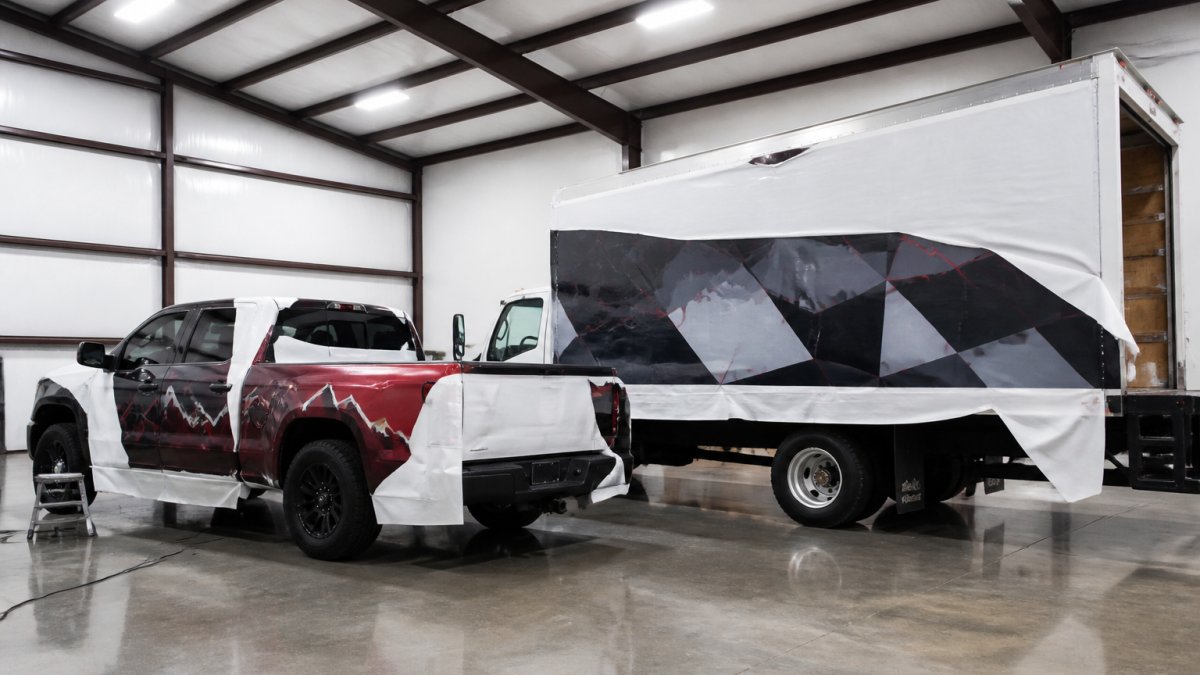
The table below shows typical full-wrap price ranges by body style for a printed commercial wrap with standard design work.
| Body Style | Approx. Wrap Area | Typical Full-Wrap Range | What Drives the Number |
|---|---|---|---|
| Compact pickup | 150-200 sq ft | $2,500-$4,000 | Small panels, simple cab, short bed |
| Full-size pickup | 200-275 sq ft | $3,500-$5,500 | Bed sides, tailgate, larger hood and roof |
| Cargo van | 250-350 sq ft | $3,000-$5,000 | Broad flat sides wrap fast; few complex curves |
| Sprinter / high-roof van | 300-400 sq ft | $4,000-$6,500 | Tall panels, roof height, more film waste |
| Box truck (16-24 ft) | 400-600 sq ft | $5,000-$9,000 | Corrugation, rivets, rear roll-up door hardware |
| Food truck | 300-500 sq ft | $4,500-$8,500 | Window cutouts, equipment-adjacent prep, service-window trim |
Three mechanisms explain most of the variation:
- Film consumption and waste. Wide-format vinyl comes in fixed roll widths. A box truck’s tall sides may force you to buy a wider roll or seam panels, and seams add labor. A compact pickup can often be cut from a narrower, cheaper roll with less waste.
- Panel complexity per square foot. Flat cargo-van sides wrap quickly. Corrugated box-truck panels and rivets require heat, relief cuts, and edge sealing around every fastener, so the labor per square foot climbs even though the film cost per square foot is similar.
- Disassembly and reassembly. Door handles, mirrors, badges, and rear-door hardware may need removal for a clean edge. A box truck’s roll-up door and liftgate add steps a pickup never has.
Body style also changes what “full wrap” means. On a pickup, full coverage usually includes the bed sides and tailgate but not the bed interior or the underside of the hood.
Ask the installer for the square footage they measured and the film roll width they plan to use. Two shops quoting the same truck with different square footage are measuring different panel lists, and that difference explains most of the price gap.
Pickup trucks sit in the middle of the range because the cab is straightforward while the bed sides and tailgate add panels and edges. Food trucks are their own category entirely, often requiring window cutouts, service-window trim, and prep around equipment vents that no standard truck wrap involves.
How Long Do Truck Wraps Last and What Ownership Costs
How long do truck wraps last? Most quality cast vinyl wraps hold up for five to seven years under normal conditions, with lifespan depending on film grade, sun exposure, and how the truck is washed.
Ownership costs beyond installation include:
- Washing – hand wash only with pH-neutral soap; automatic brushes and high-pressure jets at film edges cause lifting.
- Parking – garage or covered storage extends life in harsh sun. A truck parked outside in full sun every day sits at the low end of the lifespan range.
- Repair – panel damage from debris or collisions requires re-wrapping that section.
- Removal – end-of-life removal is a real labor cost, not a free service.
Total cost of ownership is where cheap wraps lose. A low-grade film that fails at year three means paying for removal and reinstallation years earlier than a cast film that reaches year six. Run the math on cost per year of coverage rather than sticker price:
| Scenario | Install | Removal | Years of Coverage | Effective Annual Cost |
|---|---|---|---|---|
| Economy film, outdoor parking | $4,000 | $800 | 3 | ~$1,600/yr |
| Cast film, covered parking, hand-washed | $5,500 | $1,000 | 6 | ~$1,083/yr |
The cheaper install costs more per year once you account for the shorter life and the earlier removal. That is the ownership argument, and it is the one most price-shopping buyers never run.
Maintenance also affects resale and brand presentation. A wrap that is lifting at the edges or faded on the sun-facing side undermines the advertising value you paid for.
Budget for the full lifecycle, not just the install. Materials, installation, maintenance, and eventual removal together tell you the true cost per year of coverage, and that number is the one to compare across quotes.
Climate and use pattern matter more than most buyers expect. A truck that sits outside in intense sun and gets washed weekly at a brush tunnel will not reach the top of the lifespan range no matter what film is installed. A garaged truck washed by hand can exceed it. Ask the installer what lifespan they will warrant for your specific storage and wash routine, and get that answer in writing.
Comparing Installer Quotes and Avoiding Hidden Charges
Comparing installer quotes comes down to reading the fine print, not the bottom line. Two estimates for the same truck are only comparable if they cover the same scope.
Use this checklist when reviewing any quote:
- Materials listed by brand and film type
- Design fee stated as fixed or hourly
- Surface prep and old wrap removal included or itemized
- Installation labor hours shown
- Warranty terms in writing
- Removal cost at end of life disclosed
- Timeline and vehicle downtime confirmed
Hidden charges cluster around prep, removal, and revision rounds. A shop that discloses all three upfront is telling you it has done this before. One that doesn’t is telling you something too.
The Federal Trade Commission’s guidance on advertising claims is worth a read if your wrap carries promotional claims, since vehicle advertising falls under the same truthfulness rules as any other marketing.
Workmanship verification matters as much as paperwork.
Frequently Asked Questions
What factors affect the cost of a truck wrap?
Five things move the number most: how much of the truck you cover, the size and body style of the vehicle, the complexity of the design, the vinyl film and finish you choose, and the labor hours required for installation. Preparation work, such as removing old graphics or repairing dents, adds cost on top of the base quote.
Is a partial truck wrap cheaper than a full wrap?
Yes. Partial coverage uses less vinyl film and fewer installation hours, so the price drops accordingly. A partial wrap might cover just the doors, rear panels, and tailgate, while a full wrap covers the hood, roof, and every body panel. For tradespeople who mainly need name, logo, and phone number visible, partial coverage often delivers the branding result at a lower entry point. Ask your installer to quote both so you can weigh visibility against budget.
How long do truck wraps last?
Most quality vinyl wraps last five to seven years when installed correctly and maintained with hand washing and covered parking. Horizontal surfaces like the hood and roof take the most sun exposure and degrade first. Film brand and warranty terms matter here: manufacturers such as 3M, Arlon, and Oracle publish durability ratings tied to proper care. Skipping automated brush washes and removing bird droppings promptly will extend the usable life of any wrap.
Is wrapping a truck cheaper than painting it?
Usually yes, and the gap widens on commercial vehicles. A wrap preserves the factory paint underneath, so resale value stays intact, and it can be removed or updated when your branding changes. Paint is permanent and a full respray costs more in most cases. For fleet managers who rebrand every few years, a wrap lets you change graphics without touching the underlying finish. Get itemized quotes for both if you are weighing the decision.
Can I design my own truck wrap?
You can supply your own artwork, but print-ready files need correct resolution, color mode, and panel bleed to avoid a costly reprint. Most shops include design work in the quote, and a designer who knows how graphics flow across body panels will avoid awkward seams and stretched logos. If you have a logo but no layout, ask for a design proof before production. Review it on the actual vehicle template, not just a flat image.
How long does the whole wrap process take?
Design and proofing typically take a few days to a week, printing and laminating add a day or two, and installation runs one to three days depending on vehicle size and coverage. A partial wrap on a pickup can be done faster than a full box truck wrap. Schedule around your work calendar, and ask whether the shop needs the truck dropped off the night before. Climate-controlled install bays reduce cure time and help the film set properly.
Pricing for custom truck wraps depends on your vehicle, coverage level, and design scope, and no responsible shop quotes blind. Outlaw Kustomz designs, prints, and installs in-house from our climate-controlled facility, handles everything from two-truck operations to full fleets, and stands behind the work with manufacturer-backed warranties. Call (918) 810-3929 to walk through your truck and get a real estimate.