
Table of Contents
- Paint Protection Film vs Ceramic Coating: How They Differ
- PPF vs Ceramic Coating Cost: Upfront and Long-Term
- How Long Does Paint Protection Film Last?
- Ceramic Coating Over PPF: Can You Layer Them?
- PPF Maintenance and Car Wash Rules
- Which Protection Fits Your Driving Conditions?
- Warranty Terms and Coverage Limits
- Frequently Asked Questions
Last Updated: October 16, 2026
Paint Protection Film vs Ceramic Coating: How They Differ
Choosing between paint protection film vs ceramic coating comes down to one question: do you need to stop physical damage, or do you mainly need to make your paint easier to clean and harder to attack chemically? Paint protection film is a thick, clear urethane layer that absorbs rock chips and scratches. Ceramic coating is a thin, liquid-applied layer that bonds to your clear coat and adds chemical resistance, water repellency, and gloss. At Outlaw Kustomz, we install both, and the honest answer is that they solve different problems.
Here is the distinction most drivers miss: PPF is a sacrificial barrier with real thickness, measured in mils, while a ceramic coating is a chemical layer measured in microns. One takes the hit so your paint does not. The other changes how your paint behaves when something lands on it.
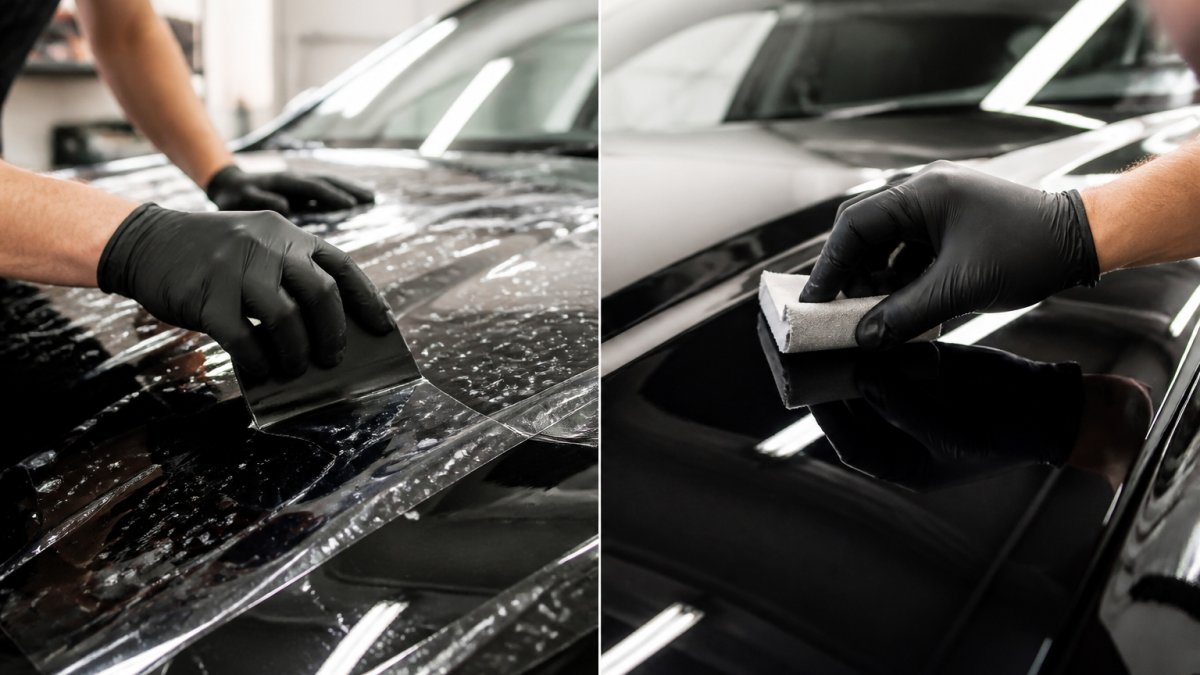
What PPF Protects Against
Paint protection film is a transparent urethane sheet that guards your vehicle’s paint against physical damage: rock chips, stone chips, road debris, scratches, and swirl marks from washing. Many films are self-healing, meaning minor scratches disappear with heat from the sun or warm water. Impact protection is the whole point. A ceramic coating cannot stop a rock at highway speed; a film can.
What Ceramic Coating Protects Against
A ceramic coating is a liquid polymer that cures into a semi-permanent layer on top of your clear coat. It defends against environmental contaminants: UV exposure, bird droppings, tree sap, road salt, and chemical etching from acid rain. It also delivers strong hydrophobic properties, so water beads and rolls off, and it makes dirt resistance noticeably better. What it does not do is absorb impact.
PPF vs Ceramic Coating Cost: Upfront and Long-Term
PPF vs ceramic coating cost is where the two products diverge sharply, and it is also where most articles stay vague. Paint protection film carries a higher upfront cost because it is a physical product that must be cut, stretched, and installed panel by panel. Ceramic coating costs less upfront because it is applied as a liquid across the whole vehicle. Exact pricing depends on your vehicle’s size, the coverage area you choose, the film or coating tier, and local labor rates, so please call (918) 810-3929 for a personalized quote.
Typical Installed Price Ranges by Coverage Area
| Coverage | Paint Protection Film | Ceramic Coating |
|---|---|---|
| Partial front (bumper, partial hood, mirrors) | $600-$1,200 | Not typically sold this way |
| Full front (hood, fenders, bumper, mirrors) | $1,500-$2,500 | Not typically sold this way |
| Full body | $4,500-$8,000+ | Not typically sold this way |
| Whole-vehicle coating, single layer | Not applicable | $500-$1,500 |
| Whole-vehicle coating, multi-layer / premium | Not applicable | $1,500-$3,000+ |
Two variables move these numbers more than anything else. First, coverage: full-front film costs far less than a full-body wrap, and partial coverage on high-impact zones is the budget-conscious middle ground. Second, prep: paint correction before either product is installed can add several hundred dollars, and skipping it is the fastest way to trap swirl marks under a clear layer.
Total Cost of Ownership Over Five Years
Upfront cost is only half the story. A quality paint protection film can last many years, and a ceramic coating typically needs reapplication sooner. Add maintenance and repair, and the long-term picture shifts:
| Factor | Paint Protection Film | Ceramic Coating |
|---|---|---|
| Upfront cost | Higher | Lower |
| Typical lifespan | 5-10 years for premium film | 1-5 years depending on tier |
| Annual maintenance | $0-$150 (soaps, mitts, occasional pro wash) | $100-$300 (boosters, toppers, inspections) |
| Reapplication | Rare; often only damaged panels | Common; full re-coat every few years |
| Repair | Panel replacement if torn | Spot re-coat or polish and reapply |
| Physical damage | Blocks it | Does not block it |
Run the math on a five-year horizon. The coating’s advantage is lower entry cost and easier DIY upkeep; the film’s advantage is that it absorbs damage the coating cannot, which protects resale value on the panels that take the most abuse.
If your paint is already chipped and unprotected, film usually wins on long-term value because it prevents the damage that drives repaint costs. If your paint is pristine and your main goal is easier washing and gloss, a coating alone can be the cheaper five-year path.
What Drives the Price Up or Down
- Film tier: entry-level film versus premium self-healing film can affect the material cost.
- Installation method: bulk film hand-cut on the car versus pre-cut computer kits changes labor hours and edge quality.
- Shop environment: a climate-controlled, dust-managed bay produces a cleaner, longer-lasting bond.
- Coating tier: consumer-grade coatings versus professional multi-layer systems differ in solids content, hardness, and warranty length.
- Add-ons: ceramic coating over film, wheel and glass coatings, and paint correction all stack onto the base price.
EPA guidance on auto refinishing and shop ventilation
How Long Does Paint Protection Film Last?
How long does paint protection film last? A quality film installed correctly typically lasts several years, and many premium films carry manufacturer warranties that cover yellowing, cracking, and delamination for a defined period. Lifespan depends on film quality, sun exposure, and how you wash the car. Cheap film installed poorly fails early; premium film installed in a controlled environment holds up far longer.
The film edge is where most installs fail first. Ask your installer how they wrap edges and whether they use pre-cut kits or bulk film. Edges that are tucked and sealed last dramatically longer than edges left exposed to lift.
Ceramic Coating Over PPF: Can You Layer Them?
Yes. Ceramic coating over PPF is one of the most common combinations we install, and it is the best of both worlds. The film handles physical damage, and the coating on top adds water repellency, gloss, and easier cleaning. Layering does not damage the film when done correctly, and it can actually extend the film’s usable life by shielding it from UV and contaminants.
The order matters. Film goes on first, then the coating cures on top of it. Never try to apply film over a cured coating, because the film will not bond properly to the paint.
PPF Maintenance and Car Wash Rules
PPF maintenance and car wash habits decide how long your investment lasts. Hand washing with a pH-neutral soap and a soft mitt is the safest routine. Avoid automatic brush washes, which drag grit across the surface and can lift film edges. Skip pressure washing directly at seams and edges.
- Wash every two to four weeks with pH-neutral soap
- Use the two-bucket method to keep grit off the mitt
- Avoid brushes, abrasive pads, and harsh degreasers
- Blot bird droppings and sap quickly; do not scrub
- Park in shade when you can to reduce UV stress on film and coating
Which Protection Fits Your Driving Conditions?
Your driving conditions should decide this, not marketing. If you commute on highways, follow gravel trucks, or drive in winter road-salt conditions, physical impact protection matters most, and that points to film. If your car mostly sits in a garage and you want easier cleaning and deeper gloss, a ceramic coating alone may be enough. For most daily drivers, the answer is film on the impact zones plus a coating over the whole car.
Skipping surface preparation is the number one reason both products fail early. Film and coating need a clean, corrected surface to bond. Installing over swirl marks or contamination traps defects under a clear layer you cannot easily fix.
Warranty Terms and Coverage Limits
Warranty terms are where buyers get surprised, and most comparison articles skip the details entirely. Film and coating warranties are not the same product category, and reading them side by side is the fastest way to understand what you are actually buying.
What Film Warranties Typically Cover
Paint protection film warranties are usually manufacturer-backed and run through the installing shop. Common covered defects include:
- Yellowing or discoloration of the film itself
- Cracking, crazing, or hazing
- Delamination (the film separating from the paint)
- Adhesive failure or bubbling not caused by impact
Typical terms run 5 to 10 years for premium film, with shorter windows for entry-level products. Coverage is usually limited to the original film on the original vehicle and is often non-transferable, or transferable only to a private-party buyer with paperwork.
What Film Warranties Exclude
This is the part that matters. Most film warranties explicitly exclude:
- Rock chips, scratches, and impact damage (the film did its job; it is not a repaint policy)
- Damage from accidents, collisions, or vandalism
- Improper washing, including brush washes and pressure washing at edges
- Installation by an unauthorized installer
- Film applied over previously damaged or repainted panels
How Coating Warranties Differ
Ceramic coating warranties are structured around maintenance compliance rather than defect coverage. A typical professional coating warranty requires:
- Regular inspections at the installing shop
- Use of approved wash soaps and toppers
- No automatic brush washes
- Prompt removal of bird droppings, sap, and bug splatter
Miss an inspection or use the wrong product, and the warranty can be voided. Coating warranties also commonly exclude water spotting, which is a maintenance issue rather than a product defect, and they rarely cover physical damage of any kind.
A warranty is only as good as the shop behind it. Ask for the written warranty document before you book, confirm whether it is manufacturer-backed or shop-backed, and find out what happens if you move or sell the vehicle.
Questions to Ask Before You Book
- Is the warranty manufacturer-backed or shop-backed, and who pays the labor on a claim?
- What specific defects are covered, and for how many years?
- What maintenance is required to keep coverage valid, and how often?
- Is the warranty transferable if I sell the car?
- What is explicitly excluded?
At Outlaw Kustomz, we back our protective film work with strong manufacturer warranties through our partnerships with Arlon, 3M, and Oracle, and we install computer-cut paint protection kits tailored to your specific make and model. Our 8,000 sq. ft. climate-controlled facility keeps dust and temperature stable during installation, which is exactly what a clean, lasting bond requires.
Frequently Asked Questions
Can you apply ceramic coating over paint protection film?
Yes. Ceramic coating over PPF is a common combination. The film handles physical damage like rock chips and scratches, while the coating adds water repellency and chemical protection on top. Applying the coating over the film also makes the film easier to wash and helps it resist UV exposure and environmental contaminants. Most installers recommend waiting a few days after PPF installation before adding the coating so the film can settle properly.
How long does paint protection film last compared to ceramic coating?
Quality paint protection film typically lasts 5 to 10 years depending on the brand, film thickness, and how it’s maintained. Ceramic coatings usually last 2 to 5 years, with some professional-grade options reaching 7 years. PPF is a sacrificial layer that absorbs impact, so it wears down physically. Ceramic coating is a chemical layer that degrades from washing and UV exposure. Both need proper care to reach their full lifespan.
Can I go through a car wash with PPF installed?
Touchless car washes are generally safe for PPF. Avoid brush-style automatic washes, which can catch film edges and cause lifting or scratches. Hand washing with pH-neutral soap and a soft mitt is the safest option. For PPF maintenance and car wash routines, skip high-pressure sprays aimed directly at film edges and avoid wax products that contain petroleum distillates, which can cloud the film surface over time.
Is paint protection film worth the cost compared to ceramic coating?
It depends on what you’re protecting against. If you drive on highways with road debris and want to prevent rock chips, PPF is worth the higher upfront cost. If your main goals are easier cleaning, water repellency, and gloss, ceramic coating delivers strong value at a lower price. Many owners combine both: PPF on high-impact areas like the front bumper and hood, then ceramic coating over the whole car for chemical protection and shine.
The real challenge is not picking a product; it is getting a clean, defect-free installation that actually lasts. Outlaw Kustomz handles both film and coating in a controlled shop, using computer-cut kits matched to your vehicle, backed by manufacturer warranties through Arlon, 3M, and Oracle. Call (918) 810-3929 and let our team protect your finish the right way.