
Last Updated: November 7, 2026
Quick Summary
To book a professional window tinting service, contact the shop with your vehicle’s year, make, model, body style, and exact glass count, plus your target shade and film type. Ask for an itemized quote in writing covering film brand, windows covered, old film removal, warranty length, and installation time before you drop off.
- Ask whether the shop is licensed and insured, who manufactures its film, and what the warranty covers.
- Confirm state VLT limits for each window position before booking, since the legal risk sits with the vehicle owner.
- Tell the shop whether the rear glass is one piece or split and whether the windshield is part of the job.
- Wait at least a week before cleaning new film and skip ammonia-based cleaners entirely.
- Outlaw Kustomz offers 30+ years of combined experience and an 8,000 sq. ft. climate-controlled facility.
Table of Contents
- Why Booking a Professional Window Tinting Service Beats DIY Kits
- What a Professional Window Tinting Service Cost Really Covers
- How to Read Professional Window Tinting Service Reviews
- Checking Installer Credentials, Insurance, and Warranty Terms
- State Tint Laws and Legal Darkness Limits Before You Book
- How to Set Up Your Window Tint Installation Appointment
- Window Tint Aftercare: Curing, Cleaning, and Warranty Protection
- Schedule Your Tint Consultation with Outlaw Kustomz
- Frequently Asked Questions
Why Booking a Professional Window Tinting Service Beats DIY Kits
A professional window tinting service is a trained installer who selects, cuts, and applies film to your vehicle or building glass in a controlled environment, then backs the work with a warranty. Too many drivers end up peeling a bubbled DIY film off their own glass and looking for a professional fix.
The gap between a kit and a pro job comes down to three things: film quality, environment, and technique. Pros typically work in a controlled environment so dust is less likely to get trapped under the film, and a trained installer can shape film to match curved glass.
A common mistake is buying a kit to save money, then paying twice: once for the kit, once for removal and a proper install.
If you want the deeper version of this argument, our team covers film selection and care on the outlaw blog.
What a Professional Window Tinting Service Cost Really Covers
Pricing for a professional window tinting service depends on several variables, including film type, vehicle size, and how many windows are covered.
Film Type, Vehicle Size, and Glass Count
Film selection drives most of the price spread. Film types vary in cost and performance; ceramic films are generally chosen for heat reduction, while dyed films cost less. Ask for a quote to see options for your vehicle.
Vehicle size matters because more glass means more film and more labor. Glass count is the fine print: most quotes assume side and rear windows, and a windshield strip or full windshield film is usually a separate line item.
How to Compare Quotes Line by Line
Ask every shop to itemize. A quote that just says “tint, all windows” tells you nothing. A detailed quote should typically break out the following:
| Quote Line | What to Check |
|---|---|
| Film brand and line | Named manufacturer, not “premium film” |
| Windows covered | Exact glass count listed |
| Old film removal | Included or billed separately |
| Warranty length | Years and what voids it |
| Installation time | Same-day or multi-day |
Watch out: a low quote may exclude removal, so the final bill can land above the estimate.
How to Read Professional Window Tinting Service Reviews
Reviews can offer useful signals about installation quality. Read for patterns, not single stars.
Look for reviews that mention the specific job you need. A rave about a commercial storefront film says little about automotive work. Search the review text for “bubbles,” “peeling,” and “came back” to see how a shop handles problems.
Photos matter as much as words. Customer-uploaded shots of finished glass show you edge quality and film darkness in real light. If you want to see what finished work looks like before you commit, browse what Tulsa customers are saying about Outlaw Kustomz and compare the photos to the reviews.
Checking Installer Credentials, Insurance, and Warranty Terms
Ask three questions before you book: Are you licensed and insured? Who manufactures your film? What does the warranty actually cover?
Insurance protects you if something goes wrong on your property or in your vehicle. Film brand matters because the manufacturer warranty usually runs through an authorized installer, not the shop alone. A shop that names its film partners is a shop that can honor a claim years later.
Read the warranty exclusions closely. Most cover bubbling, peeling, and discoloration from normal use. Few cover damage from a pressure washer, a scraper, or a pet. Get the terms in writing before the install, not after.
Our own process is documented, so you can see how installation and warranty handling work before you hand over the keys: review our process.
State Tint Laws and Legal Darkness Limits Before You Book
Window tint law is written against the vehicle, not the shop, so the legal risk sits with you as the owner. Before you book, confirm the limits for the state where the vehicle is registered and inspected, then check what your glass already has. A shop can install any shade you ask for, but it cannot absorb your ticket or your failed inspection.
Most states regulate visible light transmission, or VLT, which is the percentage of visible light that passes through the film and glass together. A lower VLT number means a darker film. Front side windows are usually held to a stricter standard than rear side and rear glass, and many states allow darker film on the back glass than on the driver and passenger front windows. Some states also cap reflectivity, ban certain colors such as red, amber, or blue, and restrict mirror or metallic finishes.
Read the statute the way an installer does. Look for four things: the VLT limit for each window position, whether the limit applies to the film alone or to film plus factory glass, any reflectivity cap, and the exemption process. Factory privacy glass on SUVs and trucks is often already dark, and adding film on top of it can push the combined VLT below the legal limit even when the film itself is compliant. That is why a shop should meter the glass before it cuts film, not after.
Enforcement usually happens at the annual safety inspection or during a traffic stop. Some states test with a handheld tint meter at the roadside, and a failed reading can produce a fix-it ticket that requires you to remove the film and show proof of correction. Vehicles that fail a tint check at inspection may need the film corrected before they pass.
Ask the installer to show you film samples against the legal limit before cutting, and ask whether the shop meters the glass or relies on the film’s rated VLT. A good shop will tell you when your requested shade is illegal rather than install it and let you find out at inspection. If you are booking for a commercial building instead, interior film rules differ from vehicle rules and are usually governed by building codes and lease terms rather than vehicle statutes, so ask separately.
How to Set Up Your Window Tint Installation Appointment
Coming prepared helps the appointment go smoothly. Have your vehicle’s year, make, model, body style, and glass count ready, plus a target shade and film type. Glass count is the detail most customers get wrong: a four-door sedan with vent windows is not the same job as a two-door coupe, and a crew-cab truck with a rear slider has more pieces than the cab count suggests. Tell the shop whether the rear glass is one piece or split, and whether the windshield is part of the job.
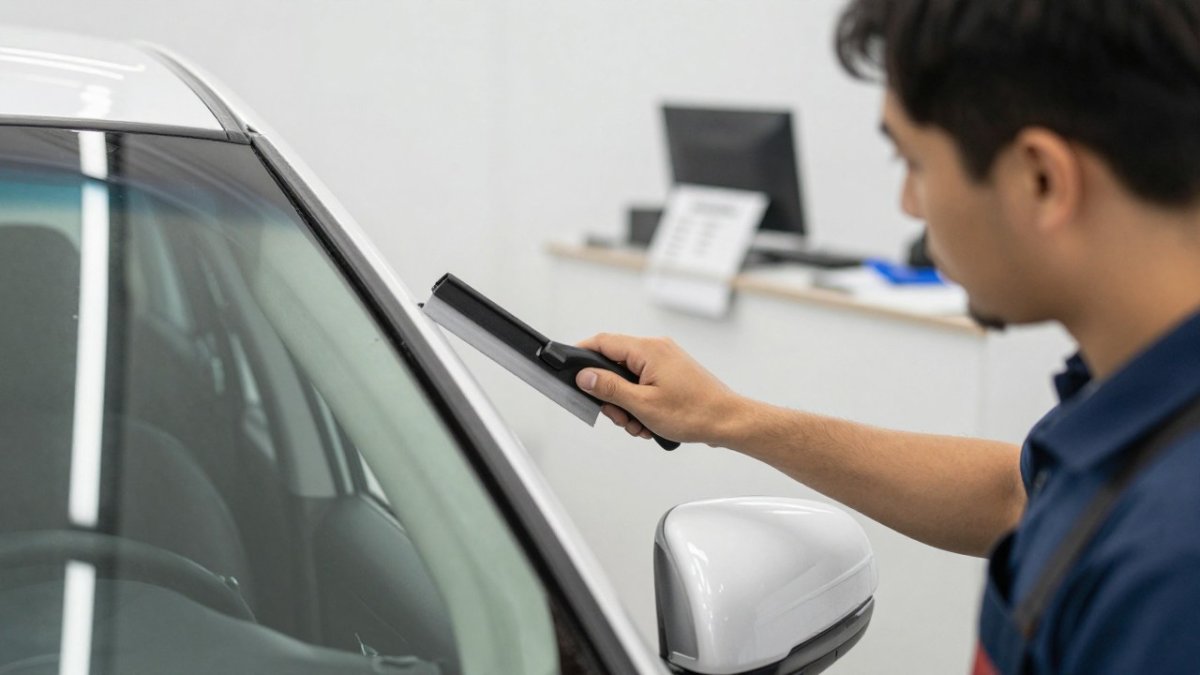
Expect to answer a few questions: Do you need old film removed? Are you tinting the windshield or just a visor strip? Do you want ceramic or standard film? Those answers shape the time slot, since removal adds labor before the new film goes on and a full windshield is a separate, more technical piece of work. If you have factory privacy glass, say so, because the shop will need to meter it to confirm the combined VLT stays legal.
Prepare the vehicle before you drop it off. Clear personal items from the seats and cargo area, remove anything hanging from the mirror, and clean the interior glass if it has heavy dust or pet hair, since the shop will do a final prep but a dirty interior slows the job. Bring your registration and any medical exemption paperwork if your state requires one for darker front film.
When you book, ask about the drop-off time, the expected pickup time, and how long the job will take. Full-vehicle work, old film removal, and windshield film typically take longer. Ask the shop for its curing instructions and for warranty documentation at pickup.
Watch out: booking by phone without confirming the glass count and film type is how appointments run long and quotes change at the counter. Get the itemized scope in writing before the drop-off. When you are ready to lock in a slot, contact us with your vehicle details and we will confirm availability.
Window Tint Aftercare: Curing, Cleaning, and Warranty Protection
New film needs time to cure, and the first two weeks decide how the job ages. Small water pockets and a slight haze are normal right after installation. They clear as the film dries.
Follow these rules during curing:
- Park in the sun when you can; warmth speeds curing
- Wait at least a week before cleaning the glass
- Skip ammonia-based cleaners entirely, since they attack film adhesive
- Use a soft cloth and mild soapy water only
- Do not roll windows down for the first few days
- Keep scrapers and ice tools away from the film edge
Watch out: pressure washing near window edges can lift film, and most warranties treat that as damage rather than defect. Save your receipt and warranty card. If a bubble or peel shows up later, that paperwork is what gets the film replaced.
Schedule Your Tint Consultation with Outlaw Kustomz
Booking a professional window tinting service is a decision about trust as much as shade. You are handing over a vehicle or a building, and you want the film to look right in five years, not five days.
Outlaw Kustomz brings 30+ years of combined industry experience and an 8,000 sq. ft. climate-controlled facility to every job, with film partnerships through Arlon, 3M, and Oracle backing our manufacturer warranties. We offer professional window tinting along with paint protection film cut to specific vehicle make and model.
You can view our work before you call, then reach us at (918) 810-3929 to book your consultation. Get started with Outlaw Kustomz and drive away with film that fits, lasts, and holds its warranty.
Frequently Asked Questions
How much should window tinting cost?
Pricing depends on film type, vehicle size, and how many windows you need covered. Ceramic films cost more than dyed or metalized options because they block more heat, and a full vehicle costs more than two front doors. Ask for an itemized quote that separates film brand, film type, glass count, and labor so you can compare offers fairly. For current prices or a quote, visit the Outlaw Kustomz website.
What should I ask a window tinting shop before booking?
Ask which film brands they install and whether they are authorized dealers, since that affects warranty coverage. Confirm the shop is licensed and insured, and ask what their workmanship warranty covers and for how long. Ask how they handle defroster lines and edges. Finally, confirm the installation timeline and whether the vehicle needs to stay overnight for curing.
How long does professional car window tinting take?
Job length depends on the vehicle or property and how much glass is covered, so ask for a timeline when you book. Ask for a realistic window when you book the window tint installation appointment so you can plan around the vehicle being unavailable.
How long should I wait before rolling down my windows after tinting?
Ask your installer how long to wait before rolling windows down, since cure time depends on the film used. The film needs time to cure and bond to the glass, and premature movement can shift the edges. During that window tint aftercare period, park in the sun when possible, avoid washing the inside of the glass, and skip any ammonia-based cleaners. Your installer should give you a specific cure time based on the film used.
