
Table of Contents
- What to Look for in a Car Wrap Shop
- Fleet Graphics and Commercial Vehicle Solutions
- Understanding Car Wrap Cost and Pricing Factors
- Vinyl Wrap Brands and Quality Standards
- Car Wrap Maintenance and Longevity
- Design, Installation, and Aftercare
- Beyond Wraps: Paint Protection Film and Window Tinting
- Frequently Asked Questions
Last Updated: October 21, 2026
What to Look for in a Car Wrap Shop
Finding the right car wrap shop near me means knowing what separates quality work from mediocre installations: technical expertise, proper facility standards, and transparent communication about timelines and expectations.
Quality wrapping starts with facility conditions. Your shop needs a climate-controlled environment to ensure vinyl adhesion and proper curing, since temperature fluctuations and dust are the enemies of a durable wrap. Ask about facility specifications: a professional operation maintains consistent temperature and humidity during installation.
Surface preparation determines whether your wrap lasts three years or starts peeling within months, and it’s where many shops cut corners. The vehicle must be thoroughly cleaned, decontaminated, and inspected for paint damage before any vinyl touches the surface.
Experience matters more than you might think. Ask how long the shop has been operating and request examples of completed work. Outlaw Kustomz brings over 40 years of combined industry experience to every project, translating to problem-solving ability when unusual vehicle geometries or paint conditions arise.
Request photos of installations from 18-24 months ago, not just recent work. This shows you how wraps actually age in real conditions. Look for edge lifting, color fading, or adhesion issues that reveal installation quality.
Fleet Graphics and Commercial Vehicle Solutions
Fleet graphics transform your vehicles into mobile billboards that work 24/7, generating impressions constantly as your team moves through the community. A car wrap shop near me that specializes in fleet work understands the unique demands of commercial vehicles.
Fleet projects require coordination and planning. You need clear timelines so your vehicles return to service without disrupting operations, so a professional provider schedules installations strategically, often wrapping vehicles in phases to maintain operational capacity. Your shop should provide detailed project schedules and regular updates.
Fleet design deserves special attention. Your branding needs consistency across all vehicles while accounting for different vehicle types and sizes, what works on a box truck doesn’t automatically work on a sedan.
Installation quality on commercial vehicles sets the standard for durability. Work trucks face harsher conditions than personal vehicles. They encounter more weather exposure, temperature swings, and road debris. Your car wrap shop should use commercial-grade vinyl and installation techniques that withstand this punishment.
Fleet graphics deliver consistent brand visibility across your service area. The key is choosing a car wrap shop with proven experience managing multi-vehicle projects and understanding commercial vehicle durability requirements.
Understanding Car Wrap Cost and Pricing Factors
Most wrap shop pages list services but hide the numbers, which is why pricing is the first question nearly every caller asks. You don’t need an exact quote to budget, but you do need to understand how shops build one. Use the ranges below as planning benchmarks, then ask each shop to itemize the same way for an apples-to-apples comparison.
Typical price ranges by coverage
- Partial wrap (bumper, hood, roof, or accents): roughly $500 to $1,500 depending on panel count and design.
- Full color-change wrap on a coupe or sedan: commonly $2,500 to $4,500.
- Full wrap on a mid-size SUV or crossover: commonly $3,500 to $5,500.
- Full wrap on a full-size truck, van, or box truck: commonly $4,500 to $8,000 or more.
- Fleet graphics per vehicle: often $1,500 to $4,000 for a partial commercial wrap, with volume pricing on multi-vehicle contracts.
These are planning ranges, not quotes. Material choice, design hours, and disassembly requirements can move a project well outside them.
The line items behind every quote
Ask for a written estimate broken into these categories:
- Film and laminate, cast vinyl plus a protective overlaminate, priced per roll or per square foot.
- Design and proofing, hourly or flat-fee artwork, revisions, and print-ready files.
- Labor hours, installation time based on vehicle complexity and coverage.
- Disassembly and reassembly, removal of door handles, mirrors, lights, and trim for a cleaner install.
- Surface prep, decontamination, clay bar, and any paint correction before film goes down.
- Removal of old vinyl or graphics, if applicable.
- Tax and shop supplies.
A single lump-sum quote makes it impossible to tell whether the shop uses premium cast film or a cheaper calendared product.
What actually moves the number
- Vehicle size and shape. More square footage and more compound curves mean more film and more labor. A Sprinter van is not a sedan.
- Film grade. Premium cast films from 3M, Avery Dennison, KPMF, and Oracal cost more per roll but conform better and last longer than calendared budget films.
- Printed versus solid color. Full-color print wraps with custom graphics add design time, print time, and laminate.
- Coverage. A roof-and-hood accent wrap is a fraction of a full body wrap.
- Condition of the paint. Peeling clear coat, dents, or rust must be addressed first or the wrap will fail.
- Timeline. Rush jobs and tight turnarounds can carry a premium.
Be cautious of a full-wrap quote that lands far below the ranges above without an explanation. It usually signals calendared film, skipped disassembly, minimal prep, or an inexperienced installer, all of which shorten wrap life. A legitimate shop will inspect your vehicle in person or request detailed photos before quoting.
Ask each shop to quote the same coverage and the same film brand and grade. Comparing a premium cast film quote against a budget calendared quote is not a real comparison, even if the totals look similar.
Vinyl Wrap Brands and Quality Standards
Film choice is the single biggest driver of how a wrap looks on day one and how it holds up in year three. Most shop pages name a brand and stop there. The useful questions are about film construction, grade, and what the warranty actually covers.
Cast versus calendared film
Wraps use one of two vinyl constructions:
- Cast film is poured onto a liner, so it has no built-in memory and conforms to compound curves, rivets, and recesses without lifting. It is the standard for full color-change wraps and is what you should expect on a quality install.
- Calendared film is rolled and stretched during manufacturing, which leaves stress in the material. It is cheaper and fine for flat surfaces and short-term graphics, but it tends to shrink and lift on curved panels.
Ask which construction the shop is quoting. A full wrap priced like a calendared job is probably using calendared film.
Brands you will encounter
- 3M 2080 series, the most widely specified cast wrap film, known for color consistency and a broad palette.
- Avery Dennison SW900, cast film with strong conformability and a large color range.
- KPMF, cast films popular for specialty and color-shift finishes.
- Oracal (ORAFOL) 970RA, cast wrap film often used for color change and fleet work.
- Hexis, cast films with a following among installers who do complex builds.
Brand alone does not guarantee quality. The same brand sells multiple product lines at different price points, so confirm the specific series, not just the logo.
What the warranty should cover
Warranties come from two parties, and you want both in writing:
- Manufacturer film warranty, typically covers defects in the film itself, such as premature fading, cracking, or adhesive failure, for a stated number of years when installed by a certified installer.
- Installer workmanship warranty, covers the labor: edge lifting, bubbling, and installation defects. Terms vary widely, so ask for the length and what voids it.
Common warranty exclusions include damage from automatic car washes, pressure washing at edges, accidents, and improper cleaning. Get the exclusions in writing before you book.
Removal and end of life
A quality cast wrap is designed to be removable, but removal isn’t risk-free. Film baked on for years, or applied over failing paint, can pull clear coat when it comes off. Ask how the shop handles removal, whether it’s included in the price, and what they do if paint damage is found underneath. This is why paint condition matters before installation: a wrap traps existing problems rather than fixing them.
Compare shops on film construction (cast versus calendared), the specific product series, and both warranty layers, manufacturer and workmanship. Those three details separate a durable wrap from a short-lived one more reliably than brand name alone.
Car Wrap Maintenance and Longevity
How you care for your wrap after installation directly impacts how long it lasts. A quality car wrap shop provides detailed aftercare instructions that many owners overlook.
Wait at least 24 hours before washing a newly wrapped vehicle so the vinyl can fully cure and bond; many shops recommend waiting even longer for maximum adhesion. During curing, avoid extreme temperatures and moisture.
Hand washing is always preferable to automatic car washes, since brushes and high-pressure sprays can catch wrap edges and cause lifting.
Parking location matters more than most people realize. Direct sunlight accelerates color fading, while tree sap and bird droppings cause chemical damage if left unattended. Park in shade when possible and remove contaminants promptly.
Regular inspection catches problems early. Check edges and seams monthly for lifting or damage, since small issues addressed immediately prevent larger ones. Most wraps last three to five years with proper care.
Document your wrap’s condition with photos at installation. Take monthly photos from the same angles. This creates a record of how your wrap ages and helps identify maintenance issues before they become serious.
Design, Installation, and Aftercare
The design phase sets the foundation for everything that follows. Your car wrap shop should collaborate with you to translate your vision into a workable design that maximizes impact.
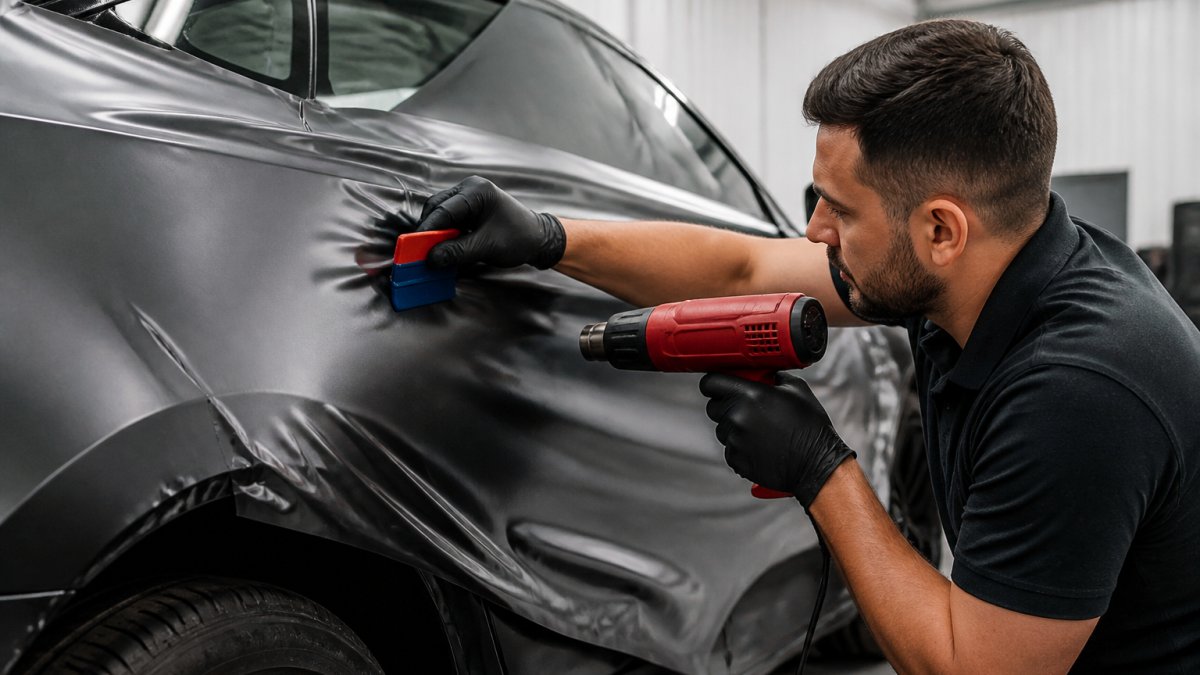
Custom graphics require understanding how design works on moving vehicles. A design that looks perfect on a flat mockup may not translate to a three-dimensional shape.
Installation demands precision and patience.
Post-installation care extends wrap life significantly. Your car wrap shop should provide written aftercare instructions covering washing, parking, and maintenance, and explain what to do if you notice edge lifting or damage.
Outlaw Kustomz’s 8,900 square foot climate-controlled facility enables the controlled environment necessary for professional installation. This investment in proper infrastructure directly translates to better outcomes for every project.
Beyond Wraps: Paint Protection Film and Window Tinting
A comprehensive car wrap shop near me often offers complementary services that enhance protection and appearance. Paint protection film and window tinting are logical extensions of wrapping capabilities.
Paint protection film shields your finish from rock chips, road debris, and UV damage. Clear film preserves original paint while providing an invisible protective layer, particularly valuable for new vehicles or premium finishes.
Window tinting reduces heat, UV rays, and glare while enhancing privacy and security. Professional tinting uses quality films that block UV radiation and reduce interior temperatures, especially valuable in hot climates where air conditioning drains fuel economy.
A car wrap shop offering these services demonstrates comprehensive customization expertise. Rather than visiting multiple providers, you work with one team that understands your vehicle across service categories.
Protecting your vehicle’s appearance and maximizing its visibility requires finding the right car wrap shop near me.
Frequently Asked Questions
What should I look for when choosing a car wrap shop?
Look for a shop with certified installers, climate-controlled installation facilities, and partnerships with recognized vinyl brands. Check customer reviews for installation quality and warranty terms. Ask about their design process, whether they create custom graphics in-house or require pre-made artwork. A reputable car wrap shop should provide examples of completed work and explain their surface preparation and installation procedures clearly.
How much does a car wrap typically cost?
Car wrap pricing depends on several factors: vehicle size, wrap type (full or partial), vinyl brand and finish selected, design complexity, and whether custom graphics are needed. Smaller vehicles and partial wraps cost less than full wraps on large trucks or commercial fleets. Get quotes from multiple providers to compare. Request an itemized breakdown that shows material costs, design fees, and labor separately so you understand what you’re paying for.
How long does a car wrap last?
Most wraps last three to five years with proper care. The lifespan depends on vinyl brand, finish type, climate exposure, and how well you care for it. Premium vinyl brands designed for automotive use generally outlast budget options. Regular washing, avoiding harsh chemicals, and parking in covered areas when possible extends wrap life. A reputable car wrap shop should provide warranty coverage that protects against premature peeling or fading.
Can a car wrap be removed without damaging the paint?
Yes, a professional car wrap removal typically does not damage the underlying paint if the vehicle’s surface was in good condition before wrapping and the installation was done correctly. Professional installers use heat and proper removal techniques to peel the vinyl safely. However, if the original paint was already compromised or the wrap was applied to damaged areas, removal may reveal those flaws. Always have removal performed by experienced technicians to minimize any risk.