
Last Updated: November 5, 2026
Quick Summary
A vehicle wrap warranty is a written promise from the film maker or installer to fix specific defects for a set period, typically two to five years depending on film type and finish. It covers film defects like bubbling, cracking, and delamination plus installer workmanship, but excludes damage, improper care, and normal wear.
- The warranty clock starts at installation, not at purchase, so a stored roll does not reset it.
- Film manufacturer warranties typically run 2-5 years and cover material defects, while installer workmanship guarantees cover labor and application.
- Matte and satin finishes often carry shorter terms than gloss because textured surfaces hold contaminants and show wear sooner.
- A vinyl wrap does not void your factory or powertrain warranty under the Magnuson-Moss Warranty Act enforced by the FTC.
- Contact the installer first, then the film maker, and never let a second shop attempt repairs before inspection.
Table of Contents
- What a Vehicle Wrap Warranty Actually Covers
- How Long Vehicle Wrap Warranties Last in 2026
- Installer Workmanship Versus Film Manufacturer Warranty
- Car Wrap Warranty Exclusions Every Owner Should Know
- How to File a Vehicle Wrap Warranty Claim
- Does a Wrap Void Your Factory or Powertrain Warranty?
- Care and Maintenance That Keeps Coverage Valid
- Requesting a Warranty Review for Your Tulsa Fleet or Vehicle
- Frequently Asked Questions
What a Vehicle Wrap Warranty Actually Covers
A vehicle wrap warranty is a written promise from the film maker or the installer to fix certain defects for a set period.
Film defects come from the material itself. Think bubbling under the surface, cracking, delamination, or color fading faster than the film should.
Drivers often assume one warranty covers everything. It doesn’t.
What a standard wrap warranty typically covers:
- Bubbling that appears without a physical cause
- Cracking or crazing in the film
- Delamination, where layers separate
- Premature fading or discoloration
- Lifting edges traced to installation
Coverage applies to the film on the panels it was installed on. If you want to see what a full wrap job includes before you buy, review our full vehicle wrap service.
How Long Vehicle Wrap Warranties Last in 2026
Vehicle wrap warranty length varies by film manufacturer, film line, and finish. The written term for your specific product is the one that governs. But the single number on the warranty card hides the real story: coverage varies by film type, finish, and where on the vehicle the film sits.
Here is the part most buyers miss. The warranty clock starts at installation, not at purchase. A roll that sat in a warehouse doesn’t reset the clock.
Warranty terms by film type and finish
A practical breakdown of how terms typically differ:
- Gloss color-change cast films: commonly two to five years, with the longer end reserved for premium cast lines and garage-kept vehicles.
- Matte and satin finishes: often shorter than gloss because the textured surface holds contaminants and shows wear sooner; many makers cap matte coverage below their gloss terms.
- Printed and commercial graphics: frequently three to five years, but coverage often focuses on fading and adhesion rather than cosmetic appearance, since printed panels are expected to show wear.
- Textured and specialty films (carbon fiber, chrome, brushed metal): terms vary widely and some makers exclude certain finishes from long-term coverage entirely; chrome-look films in particular are often the most restricted.
- Reflective and safety films: usually carry their own manufacturer terms separate from decorative wrap warranties.
Ask for the written term for your specific film line and finish before you sign, and request a quote from Outlaw Kustomz for current terms.
Application location changes the clock
Horizontal surfaces such as hoods, roofs, and trunk lids take the most sun and heat. Read the panel-specific coverage language in your warranty before assuming a claim will be approved.
Climate, storage, and usage limits
Durability depends on the film, the climate, and how the vehicle is stored and used. Extreme heat, heavy sun exposure, coastal salt air, and long-term outdoor parking all accelerate aging, and many warranties treat that aging as normal wear rather than a defect.
Commercial use may fall under different warranty terms than personal use. Confirm the commercial terms in writing before you rely on them.
What the term actually promises
A five-year warranty is not a promise that the film will look new for five years. It is a promise that the film will not fail in specific, defined ways within that window. Fading, chalking, and general aging are usually excluded as normal wear; bubbling, cracking, delamination, and premature color shift are the defects the term is meant to cover. Knowing which bucket your issue falls into tells you more about your odds than the number of years on the card.
Installer Workmanship Versus Film Manufacturer Warranty
These are two separate warranties, and mixing them up is the most common mistake we see. The film manufacturer backs the material. The installer backs the labor and the application.
| Warranty Type | Who Backs It | What It Covers | Typical Term |
|---|---|---|---|
| Film manufacturer | Vinyl film maker | Material defects: bubbling, cracking, delamination, fading | 2-5 years |
| Installer workmanship | The wrap shop | Lifting edges, peeling, poor adhesion, prep errors | Varies by shop |
| Vehicle factory | Automaker | Paint and mechanical defects, unrelated to film | Per owner’s manual |
The manufacturer warranty covers the film, and the installer’s workmanship guarantee covers labor. Confirm both before you choose a shop.
Look for a facility with climate control and a clean install bay. If you are weighing shops, our guide on finding a quality wrap shop walks through what to ask.
Get the manufacturer’s term in writing, and keep it separate from any workmanship promise the shop makes.
Car Wrap Warranty Exclusions Every Owner Should Know
Car wrap warranty exclusions are where most denied claims live. The film makers are specific, and the list is longer than most owners expect.
Common exclusions:
- Collision damage, door dings, and stone chips
- Scratches from keys, carts, or brushes
- Damage from automated car washes
- Improper cleaning or harsh chemicals
- Abuse, neglect, or misuse
- Alterations or repairs by another shop
- Normal wear and tear
- Damage from accidents, fire, or weather events
Peeling is the claim we hear about most. It is also the one most often denied, because peeling usually traces back to prep or care. Our guide on preventing vehicle wrap peeling covers the habits that keep edges down.
Check the transfer terms of your warranty before you sell the vehicle.
How to File a Vehicle Wrap Warranty Claim
Filing a vehicle wrap warranty claim starts with documentation, not a phone call. The stronger your records, the faster the review. Keep thorough records, since claims can be affected by documentation as well as the film itself.
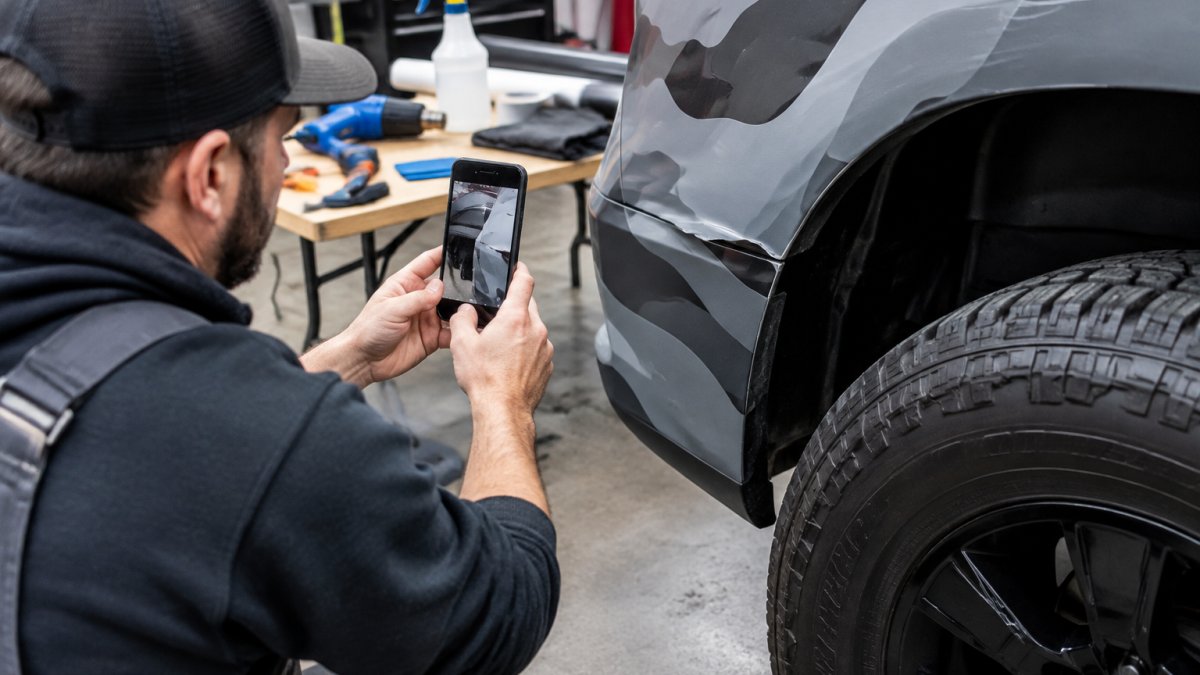
Build the claim file before anything goes wrong
Keep these items together from day one:
- The original invoice showing the film brand, product line, install date, and total price
- The written film manufacturer warranty card or PDF, with the serial or lot number if the maker provides one
- The shop’s workmanship guarantee, in writing, with its term and exclusions
- Photos of the vehicle at pickup, especially edges, seams, and corners
- A log of every wash, chemical, and detailing product used on the wrap
The manufacturer’s written term governs material defects, so keep a copy with your invoice.
Document the defect correctly
Photograph the defect three ways: a tight close-up showing the texture, a mid-range shot showing the panel, and a wide shot showing the vehicle and surrounding panels for context. Note the date you first saw the issue and whether it changed after a wash, a temperature swing, or a road trip. Patterns of lifting can matter more than a single isolated spot when a claim is reviewed.
Stop washing or touching the area once you notice a defect. Scrubbing a lifting edge to “see if it’s dirt” can turn a covered material defect into an excluded customer-caused one.
Watch out: do not let a second shop attempt a repair before the original installer or film maker inspects it. Most warranties exclude alterations or repairs by another party, and an unauthorized fix can void the claim outright.
Contact the installer first, then the film maker
The installer is usually the first point of contact because they can confirm the film line, the install date, and whether the issue is workmanship or material. If the installer is unresponsive, go to the film manufacturer directly with your invoice and warranty document.
Keep the vehicle available for inspection. Most claims need a hands-on look before approval, and some manufacturers require an authorized inspector or dealer to view the film in person.
What to expect after you submit
A typical review has three outcomes: approval for repair or replacement, denial with a written reason, or a request for more information. If you are denied, ask for the specific warranty clause the decision relies on. That written reason is what you need if you escalate to the installer, the film maker’s regional representative, or a state consumer protection office.
Keep every email, note every phone call with the date and the name of the person you spoke to, and send a written summary after each conversation. A written record helps when the installer and the film maker disagree about responsibility.
Does a Wrap Void Your Factory or Powertrain Warranty?
No. The Magnuson-Moss Warranty Act, enforced by the Federal Trade Commission, prevents automakers from voiding a warranty just because you added an aftermarket product.
That protection has limits. If a wrap directly causes a failure, the automaker can deny that specific claim.
The bigger risk is paint damage at removal, not the wrap itself.
Ask your shop how they remove film and whether removal is covered.
Care and Maintenance That Keeps Coverage Valid
Warranty coverage stays valid when you follow the film maker’s care rules. Break them, and a claim can be denied even when the defect looks like the film’s fault.
The basics:
- Hand wash with mild soap and soft mitts
- Skip automated brush washes
- Avoid pressure washing near edges
- Park in shade when you can
- Remove bird droppings and tree sap quickly
- Skip wax on matte finishes
Heat and UV are the quiet killers. A vehicle that sits in full sun all day will fade faster than one that parks in a garage.
For the full routine, our 2026 vehicle wrap care guide lays out wash frequency, products, and what to avoid.
Requesting a Warranty Review for Your Tulsa Fleet or Vehicle
A warranty review is a conversation, not a fight. Bring your paperwork, your photos, and a clear description of what changed and when.
Outlaw Kustomz works with film from Arlon, 3M, and Oracle, and backs its work with manufacturer warranties.
If an edge is lifting or a panel is bubbling, report it promptly, since small issues can grow over time. Reach out through our contact page to start a review.
Frequently Asked Questions
Is a vehicle wrap warranty worth it?
It depends on how long you plan to keep the wrap and who installs it. A warranty is only as good as the shop behind it, so check both the film manufacturer’s terms and the installer’s workmanship guarantee before you buy. Coverage that includes labor for removal and reinstallation is worth more than film-only replacement, because labor is often the larger cost when a panel fails.
What can void a vehicle wrap warranty?
Common causes include automatic brush car washes, pressure washing held too close to edges, abrasive polishes or waxes on matte and satin films, unrepaired collision or stone chip damage, and installation over rust, peeling paint, or body filler. Parking under sap-heavy trees or leaving the vehicle in prolonged direct sun without washing also shortens film life and can be cited in a denied claim.
Does wrapping a vehicle void its factory warranty?
No. A vinyl wrap does not void a factory or powertrain warranty under normal circumstances. The Magnuson-Moss Warranty Act prevents a vehicle manufacturer from denying warranty service simply because aftermarket film is present. A dealer can only decline a specific repair if it can show the wrap caused the failure, which is rare for paint and mechanical coverage.
How do you make a claim under a vehicle wrap warranty?
Photograph the defect with a date reference, note the panel and approximate mileage, and contact the installing shop first. Most workmanship warranties require the original installer to inspect the film before any removal. Bring your purchase invoice and the film manufacturer’s warranty card. The shop then files with the film maker if the issue is a material defect rather than an installation problem.
Warranty coverage is only as good as the install behind it. A careful shop, quality film, and honest paperwork are what protect your investment. Outlaw Kustomz offers full-service design, printing, and installation in a climate-controlled facility, backed by manufacturer partnerships with Arlon, 3M, and Oracle. Get started with Outlaw Kustomz and protect your wrap from day one. Call (918) 810-3929.
