
Last Updated: November 1, 2026
Quick Summary
Professional window tinting for offices is worth it when you need measurable comfort and cost improvements rather than a cosmetic upgrade. Commercial-grade film blocks solar energy at the glass, reducing heat, glare, and UV exposure without replacing the glass itself.
- Office window tinting cost depends on glass area, film type, glass condition, access height, and building hours.
- Buildings with large south- and west-facing glass generally see the biggest comfort improvement.
- Confirm glass compatibility before ordering film, since high-heat-rejection film can stress some dual-pane or low-E glass.
- For retail-facing glass, use a band of privacy film at eye level with clear glass above and below.
- Get warranty terms in writing, including the manufacturer name and coverage period, before signing.
Table of Contents
- What Professional Window Tinting for Offices Actually Changes
- Office Window Tinting Cost: What Drives the Price
- Office Window Film for Heat Reduction and Lower Cooling Costs
- Privacy Window Film for Offices: Balancing Secrecy and Storefront Visibility
- Commercial Window Tint Installation: A Step-by-Step Project Guide
- Building Codes, Glass Compatibility, and Warranty Terms to Check
- Get a Free Quote for Your Office Windows
- Frequently Asked Questions
What Professional Window Tinting for Offices Actually Changes
Professional window tinting for offices is the installation of commercial-grade window film on glass surfaces to control heat, glare, UV exposure, and privacy without replacing the glass itself. Businesses that want measurable comfort and cost improvements rather than a cosmetic upgrade are the ones this film suits.
The change is straightforward: treated glass blocks solar energy before it turns your workspace into a greenhouse. That means fewer hot spots near west-facing windows, less screen glare, and lower cooling demand during peak summer hours.
Here is what most guides get wrong. They treat tint as a single product. In practice, commercial window film is a category, and choosing the wrong type for your building’s glass and orientation wastes money. Below, we break down what drives cost, how each film type performs, and how a real installation runs so you can decide with clear expectations. You can also explore our custom window graphics for businesses to see the office window services we offer.
Office Window Tinting Cost: What Drives the Price
There is no single office window tinting cost because pricing depends on several variables that differ from one building to the next.
The main cost drivers:
- Total glass area. A small storefront is a different project than a multi-floor office with floor-to-ceiling panes.
- Film type. Solar control, privacy, security, and decorative films carry different material costs.
- Glass condition. Existing film removal, adhesive residue, and hard-water deposits add labor.
- Access and height. Second-story and atrium glass require lifts or scaffolding.
- Number of panes. Many small panes take longer to install than one large pane of equal area.
- Building hours. After-hours or weekend installation may carry a premium.
A common mistake is comparing quotes on price per square foot alone. Two bids can look similar until one excludes film removal or edge sealing. Ask each installer what is included before you compare totals.
| Cost Factor | What It Changes | Why It Matters |
|---|---|---|
| Glass area | Total material and labor | Largest single driver |
| Film type | Material cost per square foot | Solar vs. privacy vs. security |
| Removal of old film | Added labor hours | Often excluded from quotes |
| Access height | Equipment and crew size | Lifts, scaffolding, safety |
| Scheduling | Labor rate | After-hours work costs more |
Office Window Film for Heat Reduction and Lower Cooling Costs
Office window film for heat reduction works by rejecting solar energy at the glass, which reduces the load on your HVAC system. The practical result is a more stable indoor temperature and less strain on cooling equipment during peak hours.
How much you save depends on your climate, glass type, window orientation, and existing insulation. Buildings with large south- and west-facing glass generally see the biggest comfort improvement. For a deeper look at how film reduces heat and energy costs, read our energy saving window film guide.
What most guides miss is that heat reduction and glare control are related but not identical. A film that rejects heat well may not cut glare enough for a screen-heavy office. Ask your installer to match the film to your actual problem, not just the sunniest window.
Watch out: Installing high-heat-rejection film on certain dual-pane or low-E glass can create thermal stress. Always confirm glass compatibility before ordering film.
Privacy Window Film for Offices: Balancing Secrecy and Storefront Visibility
Privacy window film for offices lets you control who sees in without blacking out your storefront. Frosted, gradient, and perforated films each solve a different visibility problem.
- Frosted film blocks sightlines into conference rooms and treatment areas while still passing light.
- Gradient film keeps the top of the glass clear for branding and fades to opaque at eye level.
- Perforated film lets people inside see out while outside viewers see a printed graphic.
The trade-off is real. Full privacy film can make a storefront look closed during business hours, which hurts walk-in traffic. For retail-facing glass, we usually recommend a band of privacy film at eye level with clear glass above and below. That keeps displays visible and private areas screened.
Commercial Window Tint Installation: A Step-by-Step Project Guide
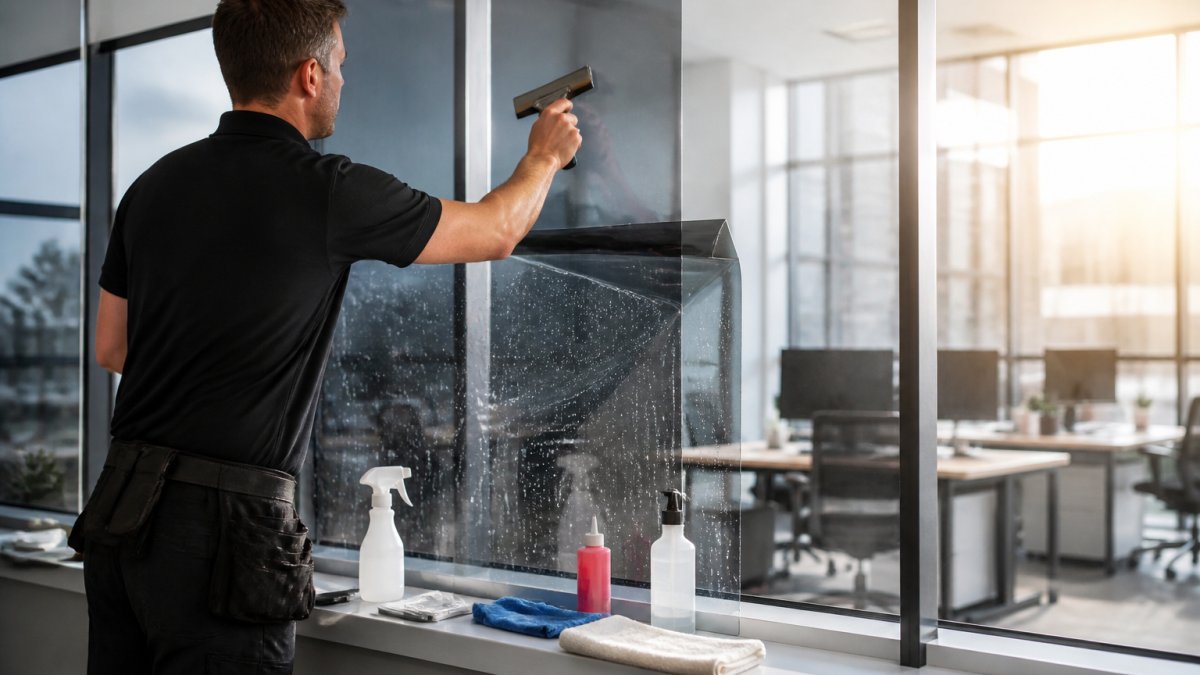
Commercial window tint installation follows a defined sequence, and knowing it helps you plan around business hours.
- Site assessment. The installer measures every pane, identifies the glass type (clear, tinted, reflective, or low-E), checks for existing film, adhesive residue, or damaged seals, and notes orientation and sun exposure. This is where glass compatibility is confirmed, not after the film is ordered. To judge installation quality before committing, view our work and see completed window and wall projects.
Scheduling Around Employees and Customers
Disruption is usually manageable if it is planned. Crews can work suite by suite, floor by floor, or after hours so desks stay usable. A few practical points:
- Work hours. Many offices prefer early-morning, evening, or weekend installation to keep phones and meetings undisturbed. After-hours work may carry a labor premium, so confirm it in the quote.
- Access. Installers need clear access to glass, which may mean moving furniture, monitors, or partitions a few feet back from the windows. Plan who moves what.
- Noise and traffic. Squeegee work is quiet, but scraping old film and moving ladders are not. Group noisy work into blocks.
- Curing time. Avoid washing treated glass for the first several days, and do not press objects against it while it cures. Most manufacturers specify a curing window in the warranty documentation.
Post-Installation Care
Once cured, commercial film is cleaned like ordinary glass: a soft cloth or squeegee, mild soap, and water. Avoid abrasive pads, ammonia-heavy cleaners on some films, and razor blades on the film surface. Keep the manufacturer’s care sheet with your building maintenance records so cleaning staff do not damage the film.
Building Codes, Glass Compatibility, and Warranty Terms to Check
Building codes and glass compatibility determine whether a film is safe to install, not just whether it looks good. Before signing, confirm three things: the film meets local code for your glass, your glass can handle the film’s thermal properties, and the warranty covers both film and labor.
Why Glass Compatibility Matters
Window film changes how glass absorbs and radiates heat, so glass compatibility is worth confirming before installation.
Code and Safety Considerations
- Tempered and laminated glass. Film behavior differs by glass type, and some films are not recommended for certain assemblies.
- Historic or leased buildings. Landlord approval and any building-specific rules should be settled in writing before work begins.
- Accessibility and egress. Film should not obscure required signage or exit visibility.
Warranty Terms to Read Closely
A common mistake is accepting a verbal warranty. Get the terms in writing, including the manufacturer name and coverage period. Ask:
- Does the film carry a manufacturer warranty, and who honors it, the manufacturer, the installer, or both?
- Is the warranty prorated, and does it cover bubbling, peeling, delamination, or discoloration?
- Does it cover labor for removal and reinstallation, or only the film material?
- What maintenance voids coverage? Most warranties require cleaning with approved products and prohibit abrasives.
- How long is the coverage period, and does it transfer if the building changes hands?
A written warranty with a named manufacturer and a clear coverage period is worth requesting for any commercial project. Cautious readers can also check our Praise & Reviews to verify our track record on tint and installation quality.
Get a Free Quote for Your Office Windows
Every office is different, and the right film for a west-facing conference room is rarely the right film for a street-level storefront. That is why we assess your glass, orientation, and goals before recommending anything.
Outlaw Kustomz operates from a climate-controlled facility and works with manufacturer partners including Arlon, 3M, and Oracle. Our team brings 30+ years of combined experience to projects of any scale.
Get a quote by contacting us or calling (918) 810-3929.
Frequently Asked Questions
What are the benefits of window tinting in an office?
Office window tinting reduces glare on screens, blocks UV rays that fade furniture and flooring, and lowers heat gain near the glass so conference rooms and perimeter desks stay comfortable. It also adds a layer of privacy and, with security laminate, holds glass together if it breaks.
How much does professional office window tinting cost?
Office window tinting cost depends on square footage, film type, glass condition, and how many panes need removal and reinstallation of blinds or fixtures. Solar control, privacy, and security films sit at different price points, and multi-floor jobs may need lifts or after-hours scheduling. Outlaw Kustomz can provide a quote based on your actual window count and film selection.
Does office window film reduce heat and glare without blocking natural light?
Yes. Office window film for heat reduction is built to reject solar heat and cut glare while still letting daylight through. The key is choosing a film with the right visible light transmission for each space: a conference room facing west may want a lower VLT to tame afternoon glare, while a lobby may want a lighter film to keep the entry bright.
How long does commercial window film last, and will it peel?
Ask for the warranty terms in writing and confirm the installer checks glass compatibility before ordering film.
Your windows are either working for your business or against it. If heat, glare, or privacy is costing you comfort and energy, professional window tinting for offices is one of the most cost-effective fixes available. Get started with Outlaw Kustomz and turn your glass into a controlled, comfortable part of your workspace.
